
The Political Uses of Names
Wolf HallThis thread traces how names, titles, and kinship claims become instruments for determining who may belong to the realm and inherit its power.
increasing Bearing strength in each event
 decreasing
Bearing strength in each eventdecreasingCromwell and His Name

The Family Name Chosen
Williams or Cromwell
Richard asks whether he should adopt Cromwell’s name. Cromwell explains their possible connections to Welsh and Tudor lines while refusing to pretend that genealogy is simple.
Naming as belonging
A name can connect the living to ancestors, but it can also be chosen and made meaningful through conduct. Richard’s decision becomes a statement about family rather than proof of noble descent.
Mary’s Title
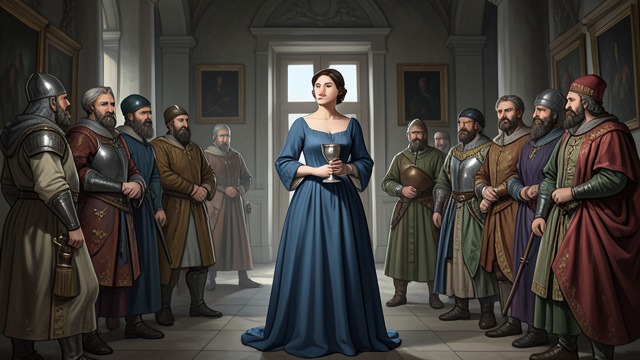
Princess or Lady
A disputed status
Mary Tudor resists being called Lady Mary because she believes she remains a princess. The court’s vocabulary attempts to make her exclusion from the succession seem settled.
Words govern rank
Cromwell understands that a title can shape treatment, inheritance, and political allegiance. The struggle over Mary’s name is also a struggle over whether the marriage that produced her was valid.
A Kingdom Called an Empire
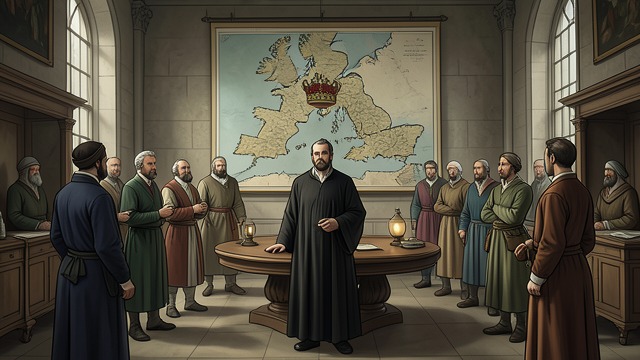
Sovereignty Reframed
The realm defined
Cromwell writes that England is an empire governed by one supreme head and king. The formulation rejects external jurisdiction and makes national identity part of the legal argument.
A name with consequences
Calling the realm an empire strengthens the king’s claims against Rome. A new description of England becomes a tool for changing its institutions and its relationship to the wider Christian world.
1530
1533–1535
1533–1534
